










 Bob McClurg
.
July 05, 2026
.
Drag Racer
Bob McClurg
.
July 05, 2026
.
Drag Racer

Tast issue we began the saga of how the Ford Mustang shaped the face of drag racing since its birth. This issue the story continues.
The year of the Cobra Jet was 1968. In the early days of the Cobra Jet project Ford engineer Bill Holbrook worked as senior mechanic on what was then called the 428GT program. One day Jacques Passano approached Holbrook and said, “I bet Tasca lunch that our car [a candy apple red ’67 Mustang GTA fastback] could beat his car.” Tasca Ford had constructed a ’67 Mustang 390 GTA two-door hardtop. Not satisfied with the car’s performance, Tasca acquired a 428 Police Interceptor short-block, swapped in a special grind FoMoCo cam, and mated it to a set of 1964 date code 427 medium rise cylinder heads and a 2×4 aluminum intake sporting a pair of 735-cfm Holleys with snorkel-type dual Ram Air. Chief mechanic Bill Gilbert also tweaked the Ford C-6 and installed a Detroit Locker 9-inch Ford rearend. The newly christened KR8 proved wicked fast. Bill Holbrook continues. “I said to Jacques, Well, how far am I allowed to go with this project? Passano says, ‘You can go as far as you want, but no cheating. It has to be all Genuine Ford Parts.’
Most experts agree that 1969 was the high water mark for Ford’s Total Performance Era. Not only did they have their hugely successful Ford Drag Team clinic programs, they also sponsored Mickey Thompson who fielded two 427 SOHC Mach-1 Mustangs


“Bob Hide and I built this 450-inch package. We installed a 428 crank into a 427 side oiler block at 454 cid. I had Harvey Crane grind up a number of cams and found the one that worked the best. We backed it up with a Ford C6 and set the transmission governors to shift at 7,400 rpm. I also wound up putting a Hurst Line Loc on the car. Basically, I wanted to get the car to where anyone could put it in drive and run the same numbers without going up in smoke.”
When the big day came, Ford X-Garage employee Bob “Jumpy” Snyder drove the 428GT, while Tasca wheeled the KR8. Tasca’s KR8 got trounced three straight, but Ford chose Tasca’s more conservatively constructed and less expensive 428 as the more practical of the two power plants, so Tasca may have lost the race but they won the war.


On Dec. 26, 1967, Ford Stock Vehicles Department’s newly appointed Manager C. R. “Chuck” Foulger sent a memo to all regional and district sales managers titled “Announcement of 428 Cobra Jet Mustang.” The memo broke down the list of special equipment indicative to the car as well as warranty and suggested retail price. Would you believe $3,612.69? In February 1968, members of Ford’s Drag Council received a total of eight H-M/Stroppe-prepared R-Code 428 CJ Mustang drag cars and totally dominated the NHRA Winternationals. Al Joniec defeated fellow Ford racer Hubert Platt for class, and defeated Dave Wren’s Mopar in the final, presenting Ford with its first ever Super Stock Eliminator win in NHRA national event history.


Most experts agree that 1969 was the high water mark for Ford’s Total Performance Era. Not only did they have their successful Ford Drag Team clinic programs, they also sponsored Mickey Thompson who fielded two 427 SOHC Mach-1 Mustangs: the blue version driven by Danny Ongais, and the red by Pat Foster. Ongais’ blue Mustang proved the bane of Funny Car Eliminator, setting records and winning prestigious events all over the country. Thompson also fielded a ’69 Boss 429 Mustang match racer that year driven by Butch Leal. That same year also witnessed Mustang Funny Car pilot Tommy Grove, relying upon Ford power, join Gene Snow in breaking the 200-mph barrier.
The Mustangs of Canada’s Barrie Poole and John Elliott garnered two national event runner-ups in 1969. The following year saw Poole and his Sandy Elliott Ltd.-sponsored ’69 428 CJ Mustang coupe give Canada its first national event win, defeating Geno Redd’s ’68 SS/FA Mustang at the NHRA Winternationals.


The start of the ’70s also marked the debut of NHRA/AHRA Pro Stock. While Ford, and specifically “Dyno Don” Nicholson’s Paul Harvey Ford-sponsored ’65 427 SOHC Mustang, had been particularly strong during the previous year’s competition, it was woefully outclassed by Bill Jenkins’ Chevrolet and Sox & Martin’s Plymouth, and was finally legislated out by NHRA. It wasn’t until 1972 when the NHRA refactored Pro Stock, allowing the 96-inch wheelbase, small-block Pintos and Vegas at 6.75 pounds per cubic inch, that Nicholson’s fortunes began to change.
Another of Pro Stock’s more interesting developments also involving Dyno Don took place in 1974 when Nicholson, Gapp & Roush and Glidden took advantage of a loophole in the NHRA rules stating 1969 or later, factory-produced coupes, sedans or station wagons were legal for Pro Stock, meaning that a 100-inch wheelbase car like a ’70 Mustang or ’70 Maverick four-door equipped with a 366-cid Boss engine could run at 6.45 pounds per cubic inch. That year Dyno Don and Glidden campaigned their infamous ’70 Mustang fastbacks. Dyno Don went on to win the 1977 NHRA Pro Stock Championship driving a Mustang II.


With Ford officially out of racing from 1972 through 1983, there wasn’t much to cheer about. Then in 1984, the creation of Ford Special Vehicle Operations (SVO) and its accompanying retail hot parts division, Ford Motorsport, marked Ford’s official reentry into organized motorsports. Glidden dominated NHRA Pro Stock with his big-block Ford Thunderbirds, but in IHRA racing, where big-inch Mountain motors ruled, Ronnie Sox won the IHRA Pro Stock championship in a Mustang for owner Dean Thompson. The Mustangs of Rickie Smith and Roy Hill were the other big IHRA attractions.


No one knows exactly why, but with the release of the 5.0L EFI Mustangs, racers who previously campaigned Tri-Five Chevys, Camaros and other popular brands of door cars were suddenly showing up at race tracks driving 5.0L Mustangs and a new movement was born. One of the earliest proponents of Pro 5.0 was Steve Collision, editor of Super Stock & Drag Illustrated (SSDI) and later Muscle Mustangs and Fast Fords magazines. Collision and contributing editor Francis Butler used SSDI as a forum for the class and even raced their own project car known as Mean Mr. Mustang. Pro 5.0L became an officially recognized class once Bill Alexander from the Fun Ford Weekend Series added it to his national event schedule, and then things really started getting serious. Early standouts in Pro 5.0L included Norman Gray, Gene Deputy, Jason Betwarda, John Gullet (the first Pro 5.0L over 200 mph), Billy Glidden and Joe de Silva. Today, Pro 5.0L is more popular than ever and has evolved into a six-second Mustang free for all.
Although there are slight differences from year to year, these new-era Mustang CJs were all
delivered with 8.50-second certified full roll cage, 3-link adjustable 9-inch rear suspension and Ford
Racing adjustable coil strut front suspension.


From 1993 to 2000, Ford Special Vehicles Team (SVT) funded three R-Model Mustang programs based on the ’93 Gen II Fox Mustang, and the ’95 and ’00 Gen III Mustangs; however, between road racers and collectors, few of these cars ever made it to the drag strip. That changed when Ford released its ’08 Cobra Jet Mustang to commemorate the 40th anniversary of the original Cobra Jet Mustangs storming Pomona. Just as if it were 1968 all over ’08 Cobra Jet Mustang, driven by John Calvert, stormed to victory at the 2009 NHRA Winternationals, paving the way for a second Cobra Jet invasion of our nation’s drag strips. Ford upped the ante in 2010 with the release of its Cobra Jet Mustang race car, followed by Ford Racing’s 2012 through 2014 Cobra Jet competition models.


Although there are slight differences from year to year, these new-era Mustang CJs were all delivered with 8.50-second certified full roll cage, 3-link adjustable 9-inch rear suspension and Ford Racing adjustable coil strut front suspension. Powered by 5.0L Ti-VCT four-valve modular V-8 engines featuring a forged-steel crank, Manley H-beam connecting rods, Mahle forged-aluminum pistons, CNC-ported four-valve cylinder heads, proprietary grind Ford Racing camshafts, an optional Whipple 2.9L supercharger and a Cobra intake featuring an oval mono-blade throttle body. Exhaust is made up of a set of 304 stainless-steel headers. Transmission choices are either a race-prepared Ford C3 automatic or Liberty five-speed transmission. At this writing, Carl Tasca Sr. has the quickest and fastest manual transmission late-model CJ in the nation, recording a 7.72-177.00 with 4.7s at 140-plus mph in the eighth-mile. Roy Hill holds the quickest and fastest marks for automatic transmission CJs at 7.92-172.00. Suddenly it’s 1968 all over again— only faster.
In an attempt to push the envelope, the concept of streamlining drag racing’s fastest accelerating vehicles has been subject to numerous interpretations. In the mid ’60s, Nye Frank’s twin-engine Pulsator; “TV” Tommy Ivo’s Video Liner; Tony Nancy’s Wedge 1 and 2; the Milodon, Scrima and Bacelik Scrima-liner; Craig Breedlove’s Spirit and Logghe, Marsh, Steffey & Rupp’s Slot Car were perfect examples of building the optimal front-engine, streamlined dragster. In late 1966, Ford Motor Company’s futuristic digger project, known as the “Super Mustang,” or the “Dragster of Tomorrow,” as Car Craft Magazine reporter Terry Cook dubbed it, joined this elite group. But why a dragster? According to author Cook, “While many of the concepts incorporated into this wild machine have been tried before, this marks the first time the principles involved have been combined in a single car. Basically, the best inherent features of the proven fuel dragsters and the Funny Cars are blended together, and to top it off, the car was covered with a sleek, streamlined envelope.”
The Super Mustang was an engineering exercise to test the effects of the Ford C6 and 427 SOHC engine in a sprung chassis. Dick Brannan and Chuck Foulger were in charge of Ford’s racing program and commissioned Ron and Gene Logghe to build the chassis, which resembled a conventional digger style but was unique in many respects. Rather than using a solid mount rear axle, Super Mustang used a coil-over sprung rearend working in conjunction with a set of traction bars mounted inside the frame rails, much like the version the Ford Thunderbolts used. The main rails were also bowed out to accommodate the wider 427 SOHC engine complete with self-starter, while the engine was mounted near mid-ship to accommodate the rather sizeable Ford C-6 automatic. Ford Top Fuel star Connie Kalitta prepared and tested the chassis and produced a best of 8.40-182. While all that was going on, Ford’s Design Center’s Gen Bordinat and Larry Shinoda worked closely with Brannan and Foulger to develop the sleek outer skin. Initially, a full-scale clay mockup was built and tested in Ford’s wind tunnel. With design optimized, a fiberglass body was created using the clay wind tunnel model as a mold. The car’s Lexan-encased nosepiece featured a 1967 Mustang running horse corral, while the rear resembled a Shelby Daytona coupe.
Super Mustang debuted at the 1967 NHRA Winternationals. Tom “The Mongoo$e” McEwen, who at the time was piloting Brand Motors’ Ford AA/FD, was selected to drive. This event was the only public running of the Super Mustang of which we are aware. The Car Craft Magazine article alluded to the installation of a supercharged 427 SOHC being installed, but that never happened, and the Super Mustang faded away into history.
“I don’t know how Mickey Thompson ended up with the car, but it sat up in the rafters of his shop in Long Beach, California for quite a few years,” McEwen commented. “A couple of years ago, the car was restored, and went through the Kissimmee, Florida auction where it sold for something like $175,000, and it now resides in a museum up in Colorado.”
Electric Vehicle Features
Robert Downey Jr.’s Electrifying Drive In the realm of Hollywood’s most iconic figures, Robert Downey Jr. has long been a shining star. Famous for his… Continue reading
Jerome Andre . January 05, 2024
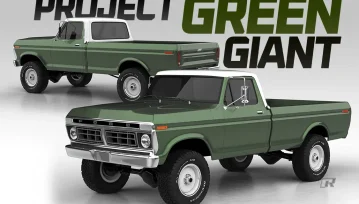
Buyer’s Guides
Bringing a Family Heirloom Back to Life Words and PHOTOS by Devan Ence I want to introduce our 1976 F-250 Highboy, a.k.a. “Project Green Giant.”… Continue reading
Devan Ence . February 07, 2024
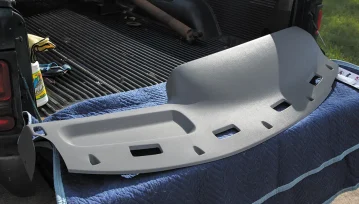
Diesel World
Follow Along as we Add Value to Our Truck! Ready for a quick weekend improvement project? Let’s get started on our DashSkin installation! We recommend… Continue reading
mach1 media . July 31, 2024

Drag Racer
Mike Molea creates a Rolling, Racing Work of Art Race cars today are often purchased turnkey or sourced from catalogs and the internet. Order a… Continue reading
Pete Ward . July 05, 2026

Feature Stories
The Apocalyptic Beauty Overlanding, apocalyptic vibes, and adventure are all things that are bundled into this one vehicle . With this 2022 Jeep Gladiator, there… Continue reading
Chad Dougla S . December 09, 2025
Events
2024 National Event Schedule MAY May 4 Atlanta Truck Invasion Atlanta www.atlantatruckinvasion.com @atlantatruckinvasion May 3-4 Chevrolet Performance Bowtie Nationals Bristol, TN www.bowtienationals.com @bowtienationals May 10-11… Continue reading
STREET TRUCKS STAFF . May 10, 2024

Goodguys 28th Griot’s Garage Colorado Nationals
The Ranch Events Complex 5280 Arena Circle, Loveland, CO 80538
Elks Auto Show
Elks Auto Show 1140 Umpqua College Rd. Winchester OR. 97470
The Sparks Show
Sevierville, TN
Goodguys 36th Autumn Get-Together
Alameda County Fairgrounds 4501 Pleasanton Avenue, Pleasanton, CA 94566
Goodguys 29th Speedway Motors Southwest Nationals
WestWorld of Scottsdale 16601 North Pima Road, Scottsdale, AZ 85260




 Please wait...
Share Link