










 ALAN PARADISE
.
July 05, 2026
.
Drag Racer
ALAN PARADISE
.
July 05, 2026
.
Drag Racer

Drag racing fans are no strangers to the colorful characters who have forged its popularity. This is especially true in the sport’s most popular class, Funny Cars. From Mongoo$e and Snake, to Jungle Jim and Ed “The Ace,” there’s been no shortage of larger-than-life personalities. Yet, like an ironic plot twist, the man who literally invented the Funny Car formula, Jack Chrisman, was the exact opposite. In fact, Jack was about as salt of the earth as they come.
To say that Jack came from humble beginnings would be a massive understatement. Born at the advent of the Great Depression (the youngest of 13 children), Jack’s childhood experiences could have been written by John Steinbeck. His family fled Oklahoma as drought and despair turned once vibrant and fertile land into the American Dust Bowl. While this dire state could have made for a troubled childhood, it provided a number of beneficial life lessons. The most important of these were the value of hard work and that nothing can replace family.

The Chrisman work ethic combined with a superior aptitude for all things mechanical allowed the family to carve out a decent living. As Jack and his cousins Art and Lloyd reached the edge of their teens, the Southern California hot rod revolution was just getting started. Compton, California was a hotbed of performance, and Jack was at the right place at exactly the right time. This was also the time when another transplanted teenager, Dee, captured Jack’s heart and became his life-long love and partner in a venture that would change the face of a yet to be defined sport.
Coming from a “hot rod” background—due to Uncle Everett, a modifier of cars in the South—the Chrisman family already had gasoline in their veins. The elder Chrisman operated a service station in Compton where Jack and Art naturally spent a great deal of time. By the time Jack reached his early twenties, he and Dee scraped together enough money to open their own service station in the nearby Willowbrook district. It was in the back shop of this two-island gas station where Jack built his first hot rod, a ’29 Model A sedan. This maroon sedan would become Jack’s first entry into the developing community of speed trials. It was a trick little rod that Jack and Art made wicked fast for the time. To give it a better look, he got a young Kenny Howard, soon to be better known as Von Dutch, to add some custom licks to the body and grille. He also added his signature “flying eyeball” to the rear deck.

Running a modified flathead, the car was a consistent winner. Not content with the limits of the older Ford engine, it was replaced with a new Chrysler 354-ci Hemi. Now it was fast, but not fast enough.
By 1955, purpose-built racers were becoming more plentiful, and Jack wanted to test his hand at real speed. He tried out Ed Lusinski’s rail job and was hooked on the new adrenaline rush. No more full-bodied cars, from now on it was going to be low, lean and to the extreme. He purchased what was known as the Purple Car and toured the numerous California tracks. Around the same time, in the midst of the NHRA fuel ban, Jack was hired to pilot the Masters & Richter dragster.

For the next several years, Jack found that the key to making a living as a driver was not to own a car, but to drive many cars, and he soon became the most sought-after driver in the sport. His ability to understand what the race car needed and how to make it down the track in short order laid the foundation for drag racing’s most radical changes. One of these was the successful introduction of the rear-engine dragster. In 1959, the Chuck Jones Sidewinder had its blown Hemi mounted sideways. It was a handful to drive, but Jack quickly mastered the remarkable hard launches and torque twist. He consistently recorded nine-second E.T.s at speeds of 160-plus mph.
In 1960, Tommy Ivo was wowing the sport with a two-engine dragster. When Howard Johansen built the Howard Cam Twin Bear, with two side-mounted engines, Jack was hired to drive it. He recorded the first eight- second run during an NHRA national event at the 1961 Winternationals, earning the Top Eliminator crown. That same year he turned an 8.78, the lowest E.T. of the year, and won the world championship.
The following season, Mickey Thompson lured Jack away from Howard Cams to drive an Ivo-built dragster. He quickly established new speed and E.T. records on gas enroute to winning the 1962 U.S. Nationals.

While Jack was a pioneer as a professional driver, the time spent on the road away from Dee and his two sons ate away at him; he missed the day-to-day contact. Still, he was also imbued with a diligent work ethic, he was a professional and honored his commitments with dedication to car owners. Dee and the boys would catch up with Jack when school was on summer break and whenever the racing returned west. It was on one of these occasions the Chrisman family would be forever changed.
It was just a normal event at Pomona, California, in May 1963. Jack brought the new Yeakel Brothers dragster to the line and prepared to do what he had done thousands of times before. When the starter jumped it all went black for Jack. A catastrophic rearend failure sent shrapnel through the car and its driver. Jack was severely injured. He spent nearly six weeks in the hospital with Dee by his side. He wouldn’t drive again that year. When he did return to the track, it would be with a new family plan, and an entirely new type of car.

Jack had spent a great deal of time with Wally Parks; in the early ’60s. As Jack continued to heal, Parks offered a way to keep him connected to the developing sport as well as remain close to his family.
As much as Jack appreciated the job with the NHRA, his passion wasn’t behind a desk but behind a wheel. He soon took a job with Sachs & Sons Mercury in nearby Downey, California. The family-owned dealership had long been a supporter of racing, and Jack found comfort in the high-performance shop environment. At the urging of both the Sachs family and Parks, Fran Hernandez of Ford Motor Company approached Jack with a proposition. For a reduced price, Mercury would sell him a new Comet. The only caveat was that he was to build a race car out of it. The offer was too tempting to pass up. For the next several months, Jack and Dee tracked the performance of similar projects being done by other manufacturers. When Hernandez pressed for a reason why the Comet was still untouched, Jack said, “If I can’t run a blower on nitro, what’s the point?” Hernandez then dropped the bomb by saying, “There are no rules here. Do whatever you want to the car, just get it on the track.” Game on.

Jack turned the family’s two-car garage in Long Beach into a race shop. There he began playing with the concept of altering the engine position, pushing it back into the firewall. Next, he reformulated the suspension with a straight-axle front and narrowed the rearend. A new Ford 427-cid engine was built to accommodate a 6-71 blower. The result was a kick-ass Comet that became the talk of the drag racing world. In 1965, Jack received a new Comet body, which he used to once again push the boundaries by moving the seat to the rear of the car and mounting the engine even further back.
In just three short years, Jack had created an experimental production-based car that had become the most popular in drag racing. In 1966, he developed a full race-built chassis for his new fiberglass Comet-bodied Funny Car, an innovation started by racer buddy Don Nicholson. To make the configuration even more radical, he had the body molded as a single-seat convertible flip-up. At the first event of the season, the Hot Rod Magazine Championships, Jack ran a 8.72 at 184-mph. Later that year, he topped that with a 188-mph pass. The Jack Chrisman Kendall Oil Comet was the class of the field until an engine explosion forced the car into the woods at New York National Speedway where it and an acre of trees went up in smoke.

In 1967, Jack, Dee and the boys were touring as a team as much as possible. By now, quick E.T.s were more crucial than big speed numbers. The new GT-1 Comet ran as fast as 7.60, often tripping the win light more than a half-second quicker than his competitors.
For the next two years, Jack was at the top of his game. The Funny Car class had grown by leaps and bounds, and the popularity of the NHRA accelerated as fast as the cars that had made the sport a big spectator draw. With Jack as the driver and crew chief, Dee as the team manager and the two Chrisman boys handling more crew duties, this became the model of the ultimate family race team. However, the rigors of touring one of the most sought-after and popular cars in the sport took its toll.

In 1967, aside from running the most popular and competitive Funny Car in drag racing, Jack and Dee had what the family called “the happy accident.” Nearly 14 years after their son Steve was born, along came Lana. This was an unexpected blessing that greatly changed the family dynamics. Dee’s time on the road was immensely curtailed, and when the boys went back to high school in September that year, Jack and the GT-1 Comet finished out the remainder of the tour without the support mechanism he cherished.
In fall 1969, when the McEwen, Prudhomme and Mattel Hot Wheels team was announced, Jack knew the days of small investment sponsors were over. The two “kid racers” that often hung around the Chrismans’ Long Beach home/shop had changed the game. Jack saw this as a sign and an opportunity, and he and Dee started to transition from touring star to aftermarket support. That was also the year he switched from Mercury to Ford, campaigning a ’70 Mustang Funny Car and carried the effort over throughout the ’71 Coca-Cola Cavalcade of Stars tour. That fall he returned home to build a new Sidewinder Funny Car using a ’72 Mustang body. However, the urge to be with his family and the physical demands told him that it was time to hang up his fire suit. The 44-year-old had had an amazing driving career and along the way became the father of the Funny Car.

With “Jack Chrisman” emblazoned on its side, the untested Sidewinder Funny Car was ready to run, but the decision was made to move on, and Jack sold it to Roy Maheu. It was renamed Nightstalker and piloted by a young driver named John Force. The race shop was converted to a machine shop with the express purpose of building the very components that nearly ended his life a decade ago. Jack Chrisman Enterprises became the family business, offering purpose-built ring and pinions, axles and rear drivelines for the drag racing industry.
It didn’t take long for the tight-knit racing community to appreciate the superior quality and craftsmanship, and they soon became state-of-the-art equipment, offering durability and safety like nothing that had come before.
Mickey Thompson came to Jack with a problem and an opportunity. Thompson had become deeply involved in off-road racing. One of the primary mechanical problems that plagued the sport was failing rear drivetrains. Thompson asked his old friend to take a look at the specifications for this type of application. Jack dove into the needs and unique challenges of developing drive components for Thompson’s off-road racing circuit.

Soon Jack Chrisman Enterprises, a two-man shop with son Larry, became the go-to place for rearend assemblies for both drag racing and off-road competition. Shortly thereafter, an additional garage was needed to expand to servicing. When younger son Steve returned home after crewing for Pro Stock driver Bill Bagshaw in August 1974, Larry left to pursue interests outside of racing.
The shop remained at the family home until 1980 when it moved to an industrial building in Long Beach. Jack also renamed the company Chrisman Driveline Components (CDC). It remained a family-run business.

CDC continued operation in the same mode until 1989 when Jack was diagnosed with a rare form of intestinal cancer. A few months later, Jack passed. Dee and Steve kept the business alive while Lana completed college. Today, CDC, now located in nearby Anaheim, California, continues to supply superior products to the racing and street performance industry. Steve remains the driving force of the business. Lana is the vice president of McLeod Racing. Dee passed in 2012.
Jack’s legacy can be summed up in many different ways. He was a man who brought professionalism to drag racing, a true innovator, a champion for safety and performance and an extremely well-liked racer. Jack was more than an icon of the sport, though, he was first and foremost the ultimate family man.
Buyer’s Guides
Fun Down on the Coast-ish Orange Beach Invasion is one of the most chill and laid-back shows on our event calendar, despite being held at… Continue reading
MIKE ALEXANDER . July 07, 2023
Buyer’s Guides
A Gorgeous Chevy K5 Gets the Ultimate Custom Treatment The 1960s and ’70s played host to the original explosion of offerings in the SUV market,… Continue reading
Lindsey Fisher . June 21, 2024
Buyer’s Guides
With the cost of just about every popular custom truck model rising, enthusiasts are starting to branch out to other production years that haven’t quite… Continue reading
John Mata Jr. . June 01, 2023
Feature Stories
Off-road legend Rod Hall restores and races one of his vintage Stroppe Broncos In the world of automotive sports, whether it be strip, street, or… Continue reading
CHRIS COLLARD . October 18, 2023

Feature Stories
A Proper Reintroduction MARRIAGE isn’t easy, but it’s a whole lot more enjoyable when your partner shares common interests. This is uniquely important when it… Continue reading
John Mata Jr. . September 15, 2025
Diesel World
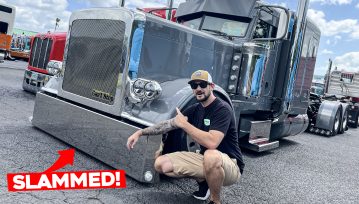
The 75 Chrome Shop Truck Show is an annual event held at the 75 Chrome Shop in Wildwood, Florida. The event is dedicated to showcasing… Continue reading
Chris Hamilton . May 01, 2023

Goodguys 28th Griot’s Garage Colorado Nationals
The Ranch Events Complex 5280 Arena Circle, Loveland, CO 80538
Elks Auto Show
Elks Auto Show 1140 Umpqua College Rd. Winchester OR. 97470
The Sparks Show
Sevierville, TN
Goodguys 36th Autumn Get-Together
Alameda County Fairgrounds 4501 Pleasanton Avenue, Pleasanton, CA 94566
Goodguys 29th Speedway Motors Southwest Nationals
WestWorld of Scottsdale 16601 North Pima Road, Scottsdale, AZ 85260




 Please wait...
Share Link