










 ALAN PARADISE
.
July 05, 2026
.
Drag Racer
ALAN PARADISE
.
July 05, 2026
.
Drag Racer

As heat waves rise from the track surface, the engine thunder of a specialty-built Camaro pierces the Texas air. Its driver carefully lines up his spot with the goal laid out before him. Smoke fills the sky as his enemy’s Nova finds its sweet spot in the accompanying lane. Slowly drivers tease the other as they stage. Crews, stationed nearby, taunt one another. With the lights ready to roll, the idle of each engine lifts to a redline roar. The lights turn green, and nearly 4,000 collective horsepower is released.
Forty years ago, this would have been the story of nearly any top level Funny Car matchup. Today, it’s the reality within the upper echelon of NHRA’s Sportsman classes.

There is a major league face of drag racing. We’ve all seen it on ESPN or at the track during national events. The big time classes of Top Fuel, Funny Car, Pro Stock and Pro Stock Motorcycle dominate the airtime. Their impressive event encampments often require multiple semi-tractor trailer rigs of spare engines, bodies, complete machine shops and hospitality areas. They are the dog and pony of the show.
If the big four classes are the face of NHRA, the true heart and soul of the sport participate in the Sportsman classes. It’s here where the racing’s yeoman work is done. The blood, sweat and passion of racing can be seen in the men, women and families that compete on tight budgets with fingers crossed that they break even at the end of the season. It’s here where Sunset Performance Racing Engines has carved out an impressive place in drag racing’s critical mass.
For more than 25 years, Sunset Performance Racing Engines has been supplying race-ready engines for various classes. The vision of Tracy Dennis, the once Lubbock, Texas-based shop, turned out engines and components for a growing list of racers. During this time, Dennis was a well-known and respected member of the racing community.

One of the first big names to discover Sunset was Jimmy Lewis. Lewis won the Super Gas World Championship in 1998 and nearly repeated the achievement in 1999. He has been a Sunset team member ever since.
As the sport changed throughout the years, Dennis wasn’t content; he wanted to stay in touch with the ever-changing technology of horsepower. He also understood his limitations. It was at this point where he convinced Joe Jolly, a man known as a top engine builder and tuner in the Pro Stock ranks as well as one of the pioneers of today’s modern Sportsman class engines, to join Sunset. “I really liked Tracy and developed a vision and plan of how to help him take Sunset to the next level and beyond,” Jolly said.
With Jolly on board, Sunset moved ahead with a new era of developing horsepower. Tommy Phillips, one of Sunset’s longtime racing partners, had become a highly skilled and successful driver and car owner. “Tracy was such a great guy and a true friend. When he convinced Joe to come into the business, I knew it was going to be a great addition for everyone,” he remarked.

Things were on a roll. The Sunset Performance Engine Team included such heavyweights as Edmond Richardson, who won his second Super Comp World Championship this past season, and Super Gas standout Craig Anderson.
The untimely death of Tracy Dennis and the circumstances that surrounded it put the business at a crossroad. Jolly worked with long-time client Buddy Wood to create a financial plan to acquire Sunset with the motivation to take the business to new heights and the sentimental fulfillment of Tracy’s legacy within drag racing.
Shortly after Wood and Jolly acquired the business, they moved it to a new, 16,000-square foot facility in Sherman, Texas. “We were already cramped for space in the old Lubbock facility. The only way to expand the business and provide a higher level of client services was to upgrade our shop and equipment,” said Jolly. Along with the new compound, further investments were made to bring in state-of-the-art balancers, dyno-testing, fabrication and assembly equipment, not to mention top-flight personnel.

Sportsman racing is a highly competitive affair. Therefore, there is no shortage of specialty engine builders to service the countless racers that make up the backbone of the sport. This makes survival no easy task. However, you must be more than a survivor; to succeed and allow your client to succeed, you must be an innovator.
Getting to the top of a field and then staying there can be a complicated process. The first step is to know more than your competition, and then be able to implement that knowledge for the largest benefit of your clients. Sunset’s next step was to focus on specific needs, and then work hard to meet those needs. This often comes through expanded product lines where learning curves will be required. In other words, concentrate your time, knowledge and resources on what you do best, and then do it better than anyone else.
The Sunset Performance Racing Engines process starts with determining the client’s specific goals and aspirations. “They’re not just an engine builder that hands you an engine and says ‘here you go.’ They tailor the engine to what you hope to achieve,” said Phillips. Owner Buddy Wood, also a long-time drag racer and car owner, remarked on how the business of Sportsman racing has been driven by the evolution of power. “The whole thing went away from the old bolt-together days of a long time ago. It has evolved into a hand-built engine era where technology allows for huge gains in horsepower with remarkable durability.”

True, the advent of flow benches, computer matching and the advancements in analyzing dyno data has taken the game to a much higher level. According to Jolly, “We can build engines that are capable of well over 300 passes. For many Sportsman racers, that’s an entire season. For others, we set up a program where at 150 runs the springs and lifters are replaced. Then, at 300, rods and pistons as well.” All modesty aside, there are Sunset Performance engines that have seen 500 runs before heading back to the shop for a freshening up. “Make no mistake, we don’t recommend that, but some bracket racers will squeeze everything they can out of one of our motors,” added Wood.
One of the keys to Sunset’s success is the process of building an engine in subtraction rather than addition. “Determining what the client is capable of doing is much harder than building a 1,500-or 2,000-horsepower engine,” said Jolly. “We can build an engine, any engine, but without the information to understand the complete package—meaning transmission, gearing and client expectations—we would simply be a supplier of horsepower. What we strive to be is a partner in success. We want all of our clients to achieve their goals,” he added.

Sunset has worked diligently to develop ready-to-run packages for all Sportsman classes. Super Gas, Super Street, Super Comp engine are the most popular. If the need is Top Sportsman or Top Dragster, those engines can be supplied as well. There are also recommendations for nitrous classes. However, this is just the tip of the iceberg. “The very nature of our sport demands that we consistently improve our product. We are always engaged in research and development,” explained Jolly. While the Sunset team offers ready-to-run-units, these are far from cookie-cutter engines. “The demand for our engines has never been higher, but our market is actually demanding, at the same time, for us to build less engines but higher caliber engines,” he added.

Anyone who has been around any form of racing can tell you one thing has always been true and is very unlikely to change: Horsepower isn’t cheap. The cost of a 565-cid Sunset engine, producing 750-hp on pump gas is $16,000. There are step-ups to the 565 Warrior Series delivering around 940-hp at $17,000. There are Pro Series 582, 598, 615 and 632 engines. The Pro Lite series starts at a 582 with 1,060-hp and jumps as high as a 781 delivering 1,560 ponies. If it’s nitrous that pumps you up, there is a 582 rating at 1,500-plus to the big dog 781 at 2,00-plus. Cost for such animals can get as high as $52,000, and in some cases more. However, when amortizing the cost over an entire season of racing (200-400 passes), then factor in the opportunity for success, it puts the entire cost into a very palatable perspective. For regional racers, that could factor to perhaps two full seasons.

The measure of Sunset Performance Racing Engines’ success can be seen at nearly every NHRA national event. At any given time, there can be anywhere from 70-100 cars running their engines. “We’re very strong in the west and up into Canada,” remarked Jolly. “At the most recent Vegas Nationals, I was blown away by the number of our engines in use. Every time I turned around I saw engines with Sunset Performance valve covers,” Jolly said. Each year Sunset builds more than 300 engines. Not all work the entire NHRA national circuit, but many compete primarily on a regional basis. They also are a popular supplier to the growing ranks of drag racers in Australia and New Zealand.

“At one point, Tracy had an event support trailer with six engines inside. He’d pull up and racers were blown away that he had that much horsepower ready to install onsite,” recalled Wood. “Now that we’re tooled up and expanded, we hope to get to that point and beyond. We are looking to be at selected events with motors for all the classes ready to go,” Wood exclaimed. The normal lead-time for an in-shop, purpose-built engine, once all of the information has been confirmed, is about eight weeks from bare block to shipping crate.
The bottom line for any racer is who gets to the finish line first. Jolly summed it up this way. “Each and every time one of our engines makes a run, we like to feel that our reputation is on the line. That’s what continues to drive us to help our client get the results they desire.” Nothing could be more straightforward than that.
Joe Jolly has been a fixture in the drag racing world for many years. His résumé includes time with Pro Stock legend Bob Glidden, and later he ran V. Gaines’ engine program. His life in the Sportsman engine field started as the general manager of MadCap Racing Engines. His relationship with Tracy Dennis lasted for many years. Although they were in the same sport and spent time as competitors, the two never met face to face until Jolly unloaded his tool case in Sunset’s Lubbock, Texas shop. “We had always compared notes over the phone, but had never actually met in person.” Jolly explained.
SUNSET PERFORMANCE RACING ENGINES
903.564.7223
SUNSETPERFORMANCEENGINES.COM

Drag Racer
HOW ‘”TV TOM” PUTTHESHOW INGO In the formative years of drag racing, the apparatus of the sport enjoyed regular waves of refinement. Engines became more… Continue reading
ALAN PARADISE . July 05, 2026
Chevrolet
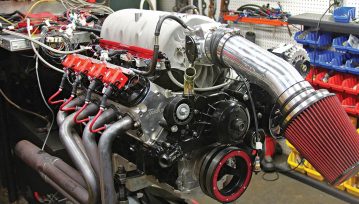
What It Takes to Build a 500HP GM Stroker Engine The debate rages between champions of the old school Chevy small-block and fans of the new-school… Continue reading
MARCEL VENABLE . May 24, 2023
All Feature Vehicles
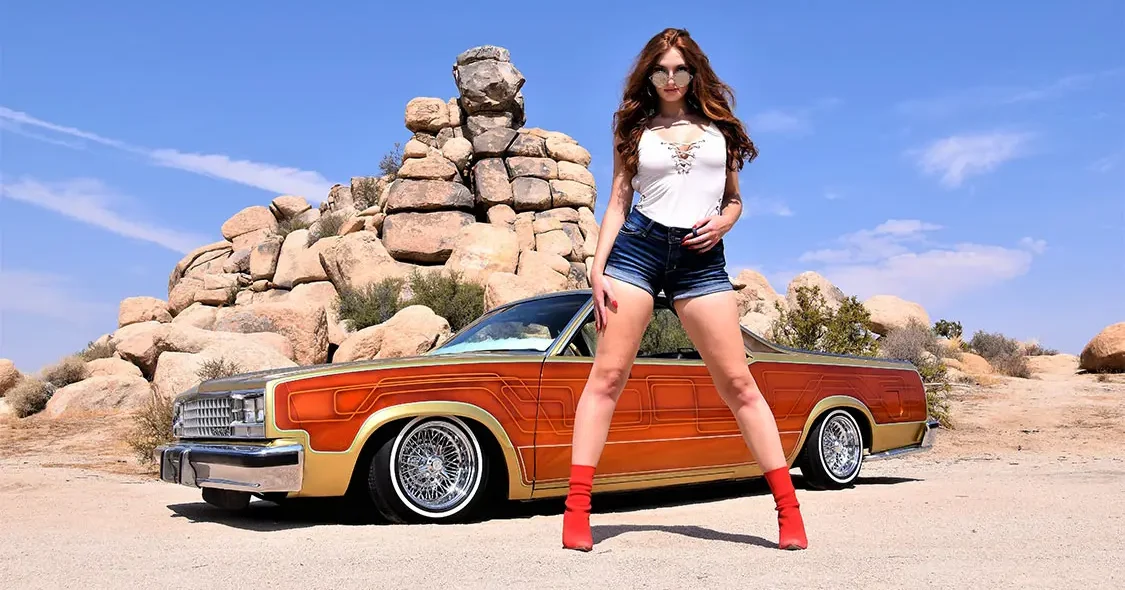
When you combine Billy’s love of custom cars and the Latino culture you obviously end up with a Lowrider El Camino. Yes sir. You… Continue reading
TOM GOMEZ . May 19, 2023
Feature Stories
David Tumino’s 1960 Ford F-250 What could be better than living in sunny Southern California and owning a classic vehicle for cruising to the beach?… Continue reading
John Mata Jr. . January 22, 2026

F Series Builders Guide
No Collagen, All Billet In all fairness to her husband, Ana Herrera must have known what she was doing. She had been “hating” on her… Continue reading
Mike Self . February 10, 2026
C10 Builders Guide
Kid Friendly Transportation and So Much More When it’s time for the next project vehicle, most folks have to decide whether to buy or build.… Continue reading
Joe Greeves . September 26, 2023

Goodguys 28th Griot’s Garage Colorado Nationals
The Ranch Events Complex 5280 Arena Circle, Loveland, CO 80538
Elks Auto Show
Elks Auto Show 1140 Umpqua College Rd. Winchester OR. 97470
The Sparks Show
Sevierville, TN
Goodguys 36th Autumn Get-Together
Alameda County Fairgrounds 4501 Pleasanton Avenue, Pleasanton, CA 94566
Goodguys 29th Speedway Motors Southwest Nationals
WestWorld of Scottsdale 16601 North Pima Road, Scottsdale, AZ 85260




 Please wait...
Share Link