










 ALAN PARADISE
.
July 05, 2026
.
Drag Racer
ALAN PARADISE
.
July 05, 2026
.
Drag Racer

No sport on Earth offers the sensory overload of drag racing. The sights, sounds, smells and ground-shaking experience are unique. It’s like combining a lightning storm, hurricane, earthquake and fuel spill all wrapped up into one magnificent event, and it happens every few minutes.
Accomplished drag racing photographers have long been praised for their ability to capture the moment, using split-second timing and experience to be at precisely the right place at exactly the right time. This is the medium most fans rely on to secure the action for posterity. The artist, however, is an entirely different animal.
The majority of automotive fine art is centered on international sports car racing, Formula 1 and vintage subjects. For drag racing fans, the number of artists that truly understand the sport is a very short list.
Kenny Youngblood is perhaps the most famous, having been on the scene since the late ’50s. Tom Rose also can be added to this list, as well as Bruce Kaiser. However, the name Mark Lueck, often hidden from view, is a talent whose work also hangs proudly on enthusiasts’ walls.

To effectively create within the subject, you must have a passion for and a deep understanding of it. Lueck has those two prerequisites down cold. He arrived in San Diego from Oak Harbor, Washington prior to entering the sixth grade. He immediately began using his artistic abilities as an icebreaker to fit into what can often be a harsh childhood environment. “This was the era of hot rodding and drag racing. Moving to Southern California was like being transplanted into Valhalla, the car culture was all around me. It was unavoidable and inescapable, and I had no intention of attempting to do either. I was a car junky and loved everything about it,” said Lueck.
On each of his brown paper book covers, Lueck sketched slingshot dragsters, wild T-buckets and crazy custom lead sleds. Once his classmates saw his drawings, he was soon taking orders at a quarter a book cover. “It seemed that almost everyday I was doing something I loved for someone else’s milk money,” Lueck remembers.
Drag racing greatly influenced the Southern California car culture. There were a dozen strips from San Diego in the south to the northern edge of Los Angeles. With names like Prudhomme, McEwen, Chrisman, Ivo, Thompson, McCulloch and Nancy running at as many as three tracks in any given week, there were plenty of personalities and action to lend inspiration to the talented 13-year- old Lueck.

At first Lueck emulated the style of Ed “Big Daddy” Roth. While the wildly exaggerated features and motion with oversized shifters and monster-like drivers endeared him to his classmates, he also developed a skill for interpreting the car culture from a more realistic viewpoint.
Throughout the next few years, Lueck continued to hone his artistic skills. Then a turn came that forever altered his life. “I had an uncle who worked for Paasche Airbrush. When I was 15, he sent me an airbrush kit. At first I didn’t know what to do with it, so it just sat in the box. Eventually I decided to give it a try,” Lueck recalled. Despite an art teacher berating him for turning in an assignment using the device, claiming that there is no such thing as airbrush art, Lueck kept working with the tool, integrating it into various projects.
He soon landed an afterschool job at a local motorcycle shop. The owner took notice of Lueck’s talent and offered him a Sportster tank to custom paint. Lueck jumped right in, learning all he could about prepping metal surfaces, paint application, clearing, cutting and buffing. Before long his tricked-out tanks became a staple of the shop.
One afternoon a unique offer came his way. As he recalled, “A customer who owned a custom conversion shop asked if I wanted to try doing a van. I figured, what the heck.” Lueck expected to get an old beater to cut his teeth on, but that was hardly the case. The owner of Taylor Made Vans, one of the largest conversion shops in the nation, had offered a real opportunity. “I was delivered a brand-new Ford van with the instructions to paint a mural on each side. Man, that was scary, but I was able to pull it off,” he added.
Before long, Lueck set up his own shop, and as fast as he finished one van, another was delivered. That led to hundreds of other jobs, including a steady flow of race cars, many were dragsters, gassers and even new Funny Cars.

Talent without passion only produces lackluster results. Lueck’s deep-seated love for automotive performance and customizing was evident on every van, rod, street machine and race car he touched. Eight- to 12-hour days of applying paint was not enough to quench his love for all things automotive. Aside from his ’58 Chevy sedan delivery, he also built a trick Harley trike and race dune buggies, but his real love was found at the drags, most notably Carlsbad Raceway and OCIR. “I was a big fan of the Snake and Mongoose rivalry. I also followed Garlits pretty closely and was intrigued by two drivers named Shirley, Muldowney and Shahan,” Lueck said.
His Saturday nights and Sunday afternoons spent at various strips led the 20-something artist to try his hand at canvas. As Lueck recalled, “I was a student of guys like Kenny Youngblood. He evolved from a letterer and striper to an artist. That was really impressive, and I wanted to see if I could make the same progression.” Like everything else, he worked on this new discipline until his skills were decently honed.
Lueck had established himself as a top-notch custom painter, but at the height of his popularity, his work environment turned against him. “Lead-based paint was still the standard of the industry. It was making me sick, and I didn’t know it until it was almost too late,” he said. Years of exposure to paint fumes and airborne particles collected in his lungs. He was faced with a choice, painting or living. He chose the latter. Lueck closed his shop and retreated from the custom paint scene. However, his passion for the subject was not lost just redirected. “I used the art of the car as part of my emotional therapy. Soon, my wife and I started exploring ways to make this work as a source of income”

Eventually Lueck traded his paint shop for an art studio. This was the time he really explored combining techniques to create interpretive art. He started working with airbrush and oils to capture the unique images of drag racing. His work caught the attention of several top names within the sport. “Mark has a great eye for the sport. His work really captures the essence of the action. And, he has an intuitive insight of what inspires racing fans,” said Tom “the Mongoo$e” McEwen.
By its inherent nature, oil and canvas art is a time-absorbing process. The discipline requires that the scene be thoroughly planned out to achieve the optimum finished work of art. It is this painstaking technique that keep artists from simply churning out meaningful works, it is also the reason the term “starving artist” exists. However, the truly clever and talented find ways to transform their passion into a source of income. Lueck’s came from original sketches, turned into full color art and then converted into metal signage. It started with old gasoline brands on metal thermometers. This led to a stroke of novel genius that helped revive the popularity of drag racing’s most legendary names.
Lueck was so well known in the SoCal car culture, especially within the drag racing community, that names including McEwen, Prudhomme, Garlits, Ivo and Leong had commissioned original works, as well as replicated vintage helmet art. He even applied his talent to restored Funny Cars and Top Fuel dragsters like the Snake & Mongoose Hot Wheels ’Cuda, Duster and matching haulers. It was from this love of the sport, his admiration for its true superstars, and his desire to bring it to life through an art form that any fan can afford, that a micro-industry was born.
Images of drag racing’s legendary personalities could have been a tricky affair. But, it is in the throws of action where the soul is stirred and the heart is engaged. In place of a static portrait, Lueck created a “ready to stage” likeness of drivers masked in fire-resistant respirators and crowned with the driver’s distinctive helmet. The first subject to be proposed for metal wall art was Tom McEwen. Lueck completed the artwork and sought McEwen’s approval. The master of drag racing promotion, McEwen approved the idea and sales were brisk, right from the start. “I did Mongoose first, just to see if it would go. Then Don Prudhomme saw the finished item and gave me the okay to create a Snake version,” Lueck explained. Once the Snake & Mongoo$e images were done, Garlits, Leong, Muldowney and Ivo all jumped on board. Soon the line was expanded to include Bruce Larson and John Mulligan. “The response was kind of overwhelming. This told me that the love for the golden era of drag racing existed far beyond my own heart,” he concluded. This led to the creation of even more original vintage drag racing art expressly to become metal wall art.
Mark Lueck prides himself on being more than an artist who loves drag racing. To this end, he purchased the Circuit Breaker, one of the last Ed Donovan-powered Top Fuel dragsters, revived it and has participated in a number of vintage events. It’s branded as the Mark Lueck Bird Man Racing machine.
In 2012, Hollywood came calling. Prudhomme had hired Lueck to apply the art to the restored Hot Wheels haulers and Funny Cars. When the feature film about Snake & Mongoo$e was in pre-production, the movie’s producers brought in Lueck to replicate the helmets used by each driver during that era. His talents were also needed to recreate the paint and lettering of the famous Hawaiian dragster seen in the film. His dragster was also used in many scenes.
In today’s world of computer-generated vinyl body wraps, true hand-to-car art is becoming a lost skill. However, with the surge in the popularity of historic drag racing, Lueck’s talents are increasingly in demand. “I love it when I can sit and create, to see drag racing from an inner perspective. That’s how special the sport is to me. And if it inspires someone else to feel the same way, for them to see and feel the way I did as I was painting it, then that’s the ultimate artistic high,” concluded Lueck.
To date, Lueck has created more than 100 oil-on-canvas originals. A handful of these are also offered in limited edition prints. The most popular features the Mongoo$e’s ’69 Tirend dragster. “It’s been very gratifying to see my art hanging in galleries and collections, but it is just as satisfying when I see one of my prints or metal signs on the wall of a garage, shop or office,” he admitted.
It was been said that once something has been immortalized in art, it lives forever. If that is indeed the case, then a special era of drag racing will live forever because of Mark Lueck and other artists who hold our sport sacred.
MARK LUECK ART & DESIGN STUDIO
619.440.1713
MARKLUECK.COM
Feature Stories
The O’Reilly Auto Parts Grand National Roadster Show, presented by Meguiar’s, recognized the country’s top roadsters, hot rods and custom vehicles during its awards ceremony… Continue reading
Chris Hamilton . February 07, 2024
All Feature Vehicles
’17 Tacoma TRD Pro Gets All the Things Three years ago, overlanding and the vehicle adventure lifestyle were new to Malcolm Tweed— but you’d think… Continue reading
Kelly Nomura . May 12, 2023
Diesel World
A Restored and Reborn 550HP ’01 Dodge You can’t buy trucks like this anymore, but if you’re a dyed-in-the-wool second-gen fan, you can certainly do… Continue reading
Mike McGlothlin . June 20, 2023
Buyer’s Guides
It Takes a Village to Keep Our C10 Community Thriving The give and take. The yin and yang. No matter what you call it, it’s… Continue reading
Ronnie Wetch . June 09, 2023

Drag Racer
Nostalgia Racing on the Other Side of the Pond By Andy Willshire With England’s Santa Pod Raceway gearing up to celebrate its half-century mark in… Continue reading
Amit Kumar . July 05, 2026
Feature Stories
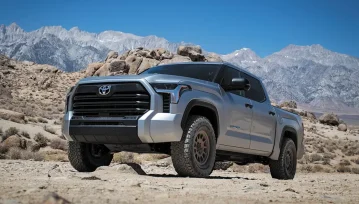
Breaking Down the Third-Gen Toyota Tundra The 2007-2021 Toyota Tundra is one of the most popular vehicles for overland travel. It checks all the boxes… Continue reading
Harry Wagner . September 10, 2024

Goodguys 28th Griot’s Garage Colorado Nationals
The Ranch Events Complex 5280 Arena Circle, Loveland, CO 80538
Elks Auto Show
Elks Auto Show 1140 Umpqua College Rd. Winchester OR. 97470
The Sparks Show
Sevierville, TN
Goodguys 36th Autumn Get-Together
Alameda County Fairgrounds 4501 Pleasanton Avenue, Pleasanton, CA 94566
Goodguys 29th Speedway Motors Southwest Nationals
WestWorld of Scottsdale 16601 North Pima Road, Scottsdale, AZ 85260




 Please wait...
Share Link