










 Bob McClurg
.
July 05, 2026
.
Drag Racer
Bob McClurg
.
July 05, 2026
.
Drag Racer

Rob Leimenstoll races this fiberglass-bodied, big-block Chevy-powered ’48 Austin Nostalgia Gasser at Midwestern events like the Meltdown Drags and Gasser Nationals running a best of 8.20-164 mph. The 44-year-old Jackson, Michigan millwright began driving his father Bruce’s Sand Dragsters at 16, and eventually converted over to quarter-mile asphalt where he’s successfully been bracket racing for a number of years.

“About six years ago we found the Grape Ape ’48 Austin listed on Racingjunk.com. My father and I drove up to Cape Cod, Massachusetts. We liked what we saw, so we bought the car and brought it back home.” Leimenstoll told us.
Like many drag racing nostalgia cars, Leimenstoll’s Austin has a colorful history. Built in 1968, it’s one of six original Contemporary Fiberglass-bodied ’48 Austin two-door sedans built, and the only one released from Contemporary’s molds that wasn’t chopped. Named the Bushwhacker, it was state-of-the-art for its time (2×3-inch main rails, Summers-equipped Olds rearend, one-piece flip-front end), but it has almost no racing history to speak of. However, we suspect that this car may have belonged to AA/GS racer the late Keith “Bushwhacker” Bush, but this is purely conjecture.

Throughout the ’70s, the Bushwhacker changed hands a number of times. In 1979, or early 1980, East Coast drag racer Rocky Pirrone found the car through a specialty car wholesaler friend of his and traded it to fellow racer Joe Collins for a small-block Chevy-powered Open GT street car.
“Rocky only had the Austin for a couple of weeks, but never raced it,” Collins said. “In fact, it showed no signs of ever being an actual running car, there were no transmission or motor mounts; there was no nothing at all in that car. The paint job was really old. It looked as though someone had painted it and stuck it outside for about 10 years. I installed a small-block Chevy and Turbo 400 in it, repainted it Ford Probe Purple and rechristened the car the Grape Ape. We ran it in Super Gas and routinely ran 9.20s at 142. I remember I used to leave the starting line looking out the side window just to make sure I was going the right direction. Then when I hit high gear the front end settled down, and I was able to look through the front window and see down track!”

Collins kept the Austin for nearly 25 years. Around 2005, NHRA Division One racer John Lang purchased the Gasser, outfitting it with a single carbureted 427 big-block Chevy running in the low nines and continued to campaign the car as the Grape Ape.
“The car weighed 2,140 pounds. With that engine combination it was just barely legal for Super Gas,” Lang commented. “It was just a real, real light car.”
Lang campaigned the Grape Ape in S/G for about three years. Then he built up a blown, alcohol-burning big-block Chevrolet that he planned to install in the car but changed his mind, figuring that 1,800 hp was a bit too much for the short wheelbase flyweight and decided to sell it.
When the Leimenstolls purchased the Austin, they swapped in the same 427 L88 that they had been running 9.50s with in their Camaro and changed the Austin’s name to Attack. Leimenstoll’s father Bruce drove.

“When we bought the car, we had to update the chassis to certify it to run 8.50. We added a few bars to it and ran the car that way for three to four years. It was a really tight fit for me. I needed to be sitting farther back in the car, which meant that I would be sitting behind the rear hoop, so we sent the chassis to Randy King at Skinny Kids Race Cars to have a Funny Car cage installed. Once Randy got to looking into it, he called me up saying, ‘This is dangerous. You don’t want to have a crash in this thing!’ Randy showed me a lot of the things that they did back in the day that were quite acceptable, but totally different from what chassis builders are doing today.”

The Leimenstolls also purchased a blown 496-cid big-block Chevrolet engine from Waterford, Michigan’s Dare Devil Speed Shop. “We went a little overboard with the blown motor. Dad didn’t want to drive the car anymore, so that left it up to me. I made the decision to take the chassis all the way down to the main rails and start all over again, and this is the end result. It’s almost like having a whole new car, and now we can safely attack the sevens!”
WHEELBASE: 92 INCHES
MAIN RAILS: 2X3-INCH RECTANGULAR TUBING. CHASSIS UPDATED TO CURRENT NHRA SEMA-SFI 25-4 (7.50 CERTIFICATION) BY SKINNY KIDS RACE CARS, WALLED LAKE, MI
ROLL CAGE: FUNNY CAR STYLE
FRONT SUSPENSION: 2-INCH DROPPED TUBE AXLE WITH FOUR-BAR SUSPENSION FRONT RUNNING REMACHINED FORD ECONOLINE FRONT SPINDLES
STEERING: MUSTANG RACK-AND-PINION STEERING
FRONT WHEELS: AMERICAN RACING EQUIPMENT SPINDLE-MOUNT 15X3 .5-INCH FIVE SPOKES
FRONT TIRES: 23X4.5-INCH HOOSIER
REAREND: SKRC-BUILT, 4.30:1 STRANGE ENGINEERING-GEARED, 36-SPLINE STRANGE AXLE, NARROWED FORD 9-INCH
REAR SUSPENSION: STRANGE ENGINEERING COIL-OVER REAR 4-LINK BY SKRC
WHEELIE BARS: SKRC
REAR WHEELS: AMERICAN REBEL 16X13 INCHES
REAR TIRES: 13.16 M&H
ENGINE: DARE DEVIL SPEED SHOP (WATERFORD, MI) 8.5:1 COMPRESSION BLOWN GAS 496-CID B.B. CHEVY
BLOWER: BLOWER DRIVE SERVICE, BDS 6.71 AT 18-19 PSI
CARBURETORS: QUICK FUEL TECHNOLOGIES
CYLINDER HEADS: ALUMINUM ALLOY REPRODUCTION AIR FLOW RESEARCH (AFR) BIG- BLOCK CHEVROLET
VALVES: 11/32 STAINLESS STEEL INTAKE AND EXHAUST
VALVETRAIN: JESEL COMPONENTS
CRANKSHAFT & ROTATING ASSEMBLY: OHIO CRANKSHAFT CO.
CAMSHAFT: COMP CAMS, 383 AT 550 MAX VALVE LIFT, 255 DEGREES DURATION
OIL SYSTEM: MILODON ENGINEERING
HEADERS: SKINNY KIDS RACE CARS
IGNITION: MSD 7AL DIGITAL
COOLING: AFCO FOUR-CORE RADIATOR AND SPAL ELECTRIC FAN
TRANSMISSION: COAN TH400, 5,000-RPM STALL SPEED COAN TORQUE CONVERTER
DRIVESHAFT: SKRC
BODY: CONTEMPORARY FIBERGLASS ’48 AUSTIN TWO-DOOR SEDAN
PAINT: CHARLIE VICKERY AT WEATHERFORD, MI’S CREATIVE AUTO WORKS, HOUSE OF KOLOR CANDY APPLE RED WITH BRANDY WINE LACE SIDE INSERTS OVER AN ORION SILVER BASE
LETTERING: GOLD LEAF AND BLACK BY STEVE FAIRMAN
FUEL CELL: JAZ
BATTERIES: OPTIMA
ALUMINUM INTERIOR PANELING: SKRC
SAFETY EQUIPMENT: SIMPSON PARACHUTE, G-FORCE SAFETY HARNESS
PERFORMANCE: 8.20-164.00 MPH
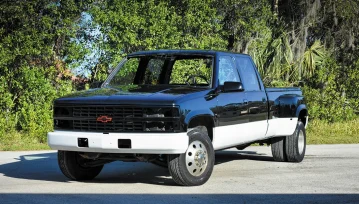
Chevrolet
Getting Started on the1993 Silverado C3500 DUALLY If you missed Part 1 of this build, let us get you up to speed. We picked up… Continue reading
Josh McPherson . October 04, 2023

Drag Racer
THE 42ND ANNUAL PEPSI NIGHTFIRE NATIONALS IS ANOTHER SMOKIN’ SUCCESS Temperatures were cookin’ this year. Afternoon heat pushed the corrected altitude to nearly 7,000 feet… Continue reading
New Crew . July 05, 2026

Events
TURKEY RUN While car shows come and go, there is one legendary event that has been around for more than half a century. Well known… Continue reading
Joe Greeves . October 16, 2025
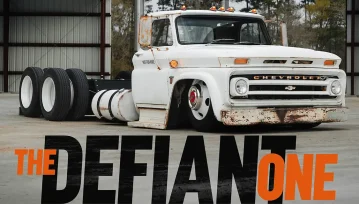
Buyer’s Guides
A Long Haul C60 Built For the Highway Defiance is often looked upon with disdain from those who don’t quite fully understand that it’s just… Continue reading
Mike Self . August 25, 2023
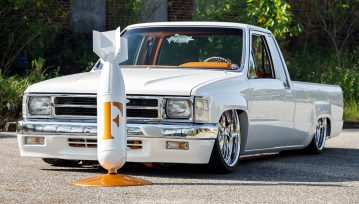
Feature Stories
A Dream Built in the Garage FOR John Byrne of Surprise, Arizona, building his 1988 Toyota pickup, now known as “F-Bomb,” was a throwback to… Continue reading
Chris Hamilton . January 20, 2026
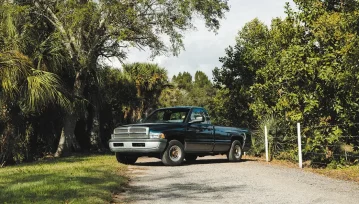
Diesel World
Putting our 94’ 12 valve through its paces Stock to not is our 1994 Ram 2500 build that we have taken from “stock” form as… Continue reading
DW STAFF . March 29, 2024

The Sparks Show
Sevierville, TN
Goodguys 36th Autumn Get-Together
Alameda County Fairgrounds 4501 Pleasanton Avenue, Pleasanton, CA 94566
Goodguys 29th Speedway Motors Southwest Nationals
WestWorld of Scottsdale 16601 North Pima Road, Scottsdale, AZ 85260




 Please wait...
Share Link