










 Hemant Tiwari
.
July 05, 2026
.
unposted
Hemant Tiwari
.
July 05, 2026
.
unposted

Overland trailers have evolved quickly. Independent suspensions, onboard water systems, lithium batteries, and increasingly sophisticated braking systems are now common, even on relatively compact trailers. At the same time, more people are towing these trailers with mid-size trucks chosen for their trail capability, manageable size, and everyday drivability.

Trucks like the Toyota Tacoma, Chevy Colorado, Ford Ranger, and Nissan Frontier have become staples in the overland world. They’re capable, efficient, and well-suited for hauling modern off-road trailers. But there’s a catch. Many mid-size trucks don’t come standard with a factory-installed trailer brake controller.
Even when towing capacities are well within a vehicle’s rating, braking control is often left unaddressed. As trailer technology has advanced, that gap has become harder to ignore.
To understand why, it helps to start with the basics.

A trailer brake controller is the device that allows the driver to control the brakes on a trailer from inside the tow vehicle.
When you press the brake pedal in your truck or SUV, the vehicle’s brakes engage automatically. Trailer brakes, however, require a separate signal. The brake controller sends an electrical command to the trailer, telling its brakes when to apply and how much force to use.
Without a brake controller, the tow vehicle does nearly all the stopping. As trailer weight increases, this can lead to longer stopping distances, increased wear on the vehicle’s brakes, and reduced control, especially during emergency braking or long downhill descents.

Not all trailer brake systems work the same way.
Some trailers use surge brakes, which rely on the forward motion of the trailer compressing a coupler to apply braking force hydraulically. These systems are self-contained and do not require a brake controller. They’re common on smaller utility trailers and some boat trailers.
Most overland trailers, however, use electric drum brakes or electric-over-hydraulic (EOH) brakes. Both systems rely on an electrical signal from the tow vehicle to apply braking force, which means a brake controller is required.

Many newer trucks offer factory-integrated brake controllers, and in many cases, they work well. Compatibility isn’t always straightforward, particularly with electric-over-hydraulic systems.
Some factory controllers, especially earlier designs, were developed primarily around electric drum brakes. Certain EOH actuators require specific signal characteristics, settings, or adapters to function reliably. As a result, having a factory brake controller doesn’t always guarantee seamless integration across all trailer brake systems.

That’s where aftermarket brake controllers can move from a convenience to a necessity. A dedicated aftermarket unit allows the braking system to be matched to the trailer, rather than forcing the trailer to adapt to the vehicle.
Most brake controllers are built around proportional braking. These systems sense vehicle deceleration and apply trailer braking in sync with the tow vehicle. On pavement, this feels natural and predictable. Off-road, conditions change.


Loose surfaces, steep descents, and inconsistent traction can cause proportional systems to feel overly aggressive or unpredictable. For this reason, few brake controllers go beyond proportional braking to address off-road towing directly.
Some manufacturers, including REDARC Electronics, have taken things a step further by offering controllers with a manual off-road mode. In this mode, the driver sets a fixed level of trailer braking and adjusts it as conditions change, rather than relying solely on vehicle deceleration. For overlanders moving between pavement and trail, that added control can make a meaningful difference.

Braking isn’t just about stopping distance. It’s also about stability.
Trailer sway can begin subtly, triggered by crosswinds, passing traffic, uneven pavement, or sudden steering inputs, and escalate quickly if left unchecked. REDARC’s new Tow-Pro Link uses a feature called SwayStop Plus™ to help address these moments.
Rather than requiring the driver to press and hold a manual override while also steering, SwayStop Plus is activated with a single press and release. The controller continues applying trailer brakes until the sway event is reduced, allowing the driver to focus on maintaining control of the vehicle.
In real-world towing situations, reducing driver workload in moments like these can be just as important as braking force itself.

For drivers looking at the current generation of brake controllers, the Tow-Pro Link represents REDARC’s newest approach. It’s a recently released, Bluetooth-enabled controller designed to simplify installation, reduce cabin clutter, and make advanced braking features easier to use.
The Tow-Pro Link supports both electric drum brakes and electric-over-hydraulic systems. It combines proportional braking for everyday towing with a manual off-road mode for technical terrain and includes SwayStop Plus for added stability on the road.

Modern functionality is built in as well. The system pairs a compact in-cab remote with smartphone integration via the Tow-Pro app and supports integration through Apple CarPlay and Android Auto on compatible vehicles. This makes it easier to access information and adjust settings, especially for drivers who regularly switch between trailers or move between on-road and off-road towing.
For overlanders towing modern trailers behind mid-size trucks, it’s a system designed around how people actually travel today.
The Tow-Pro Link is available through REDARC’s dealer network and major overland, towing, and off-road retailers.

Video available for embedding: https://www.youtube.com/watch?v=CvxPFNb5060
It’s easy to focus on visible upgrades like tires, suspension, and storage, but braking is one of the few systems that influences every mile you tow. When it’s dialed, towing feels calmer. Descents feel controlled. Sudden stops feel manageable instead of chaotic.
As overland trailers continue to advance, the systems that connect them to our vehicles need to advance as well. A good brake controller doesn’t draw attention to itself. It simply makes the entire towing experience more stable, predictable, and safer.


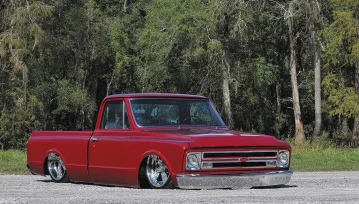
C10 Builders Guide
Chad Does it Again Having a name like Chad Shetsky has come with a lot of jokes and jabs but what isn’t a joking matter… Continue reading
PHIL GORDAN . October 16, 2023

Electric Vehicle Features
How Jack’s Garage & Circular EV are building the Future of Bolt-On EV Kits When Joseph Salama stands beside Aziza, his Pearlescent Gold 1978 Volkswagen… Continue reading
Jerome Andre . October 24, 2025
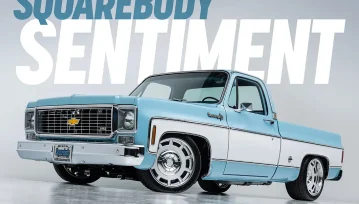
C10 Builders Guide
Byron Morgan’s 1974 C10 Is a Family Revival Done Right Some guys build trucks to stand out. Others build ‘em to bring back a piece… Continue reading
Corey Decker . March 30, 2026
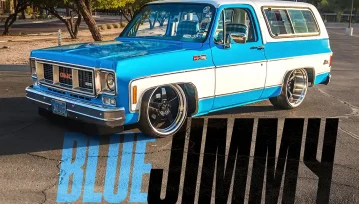
Chevrolet
Most kids growing up have dream projects and setups they’d love to have. As we get older, budgets change and wants differ, the chase for… Continue reading
Victor Lopez . March 25, 2025

unposted
Jake McKiddie and the Ultimate Phat Phabz Dually Bigger is better”—it’s a saying we’ve all heard, but for Jake McKiddie, it’s a way of life.… Continue reading
Grant Cox . November 05, 2025
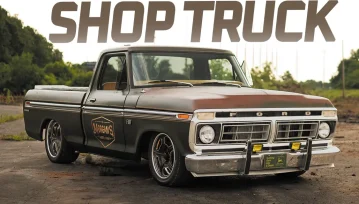
Feature Stories
The Tire-Burning, Gear-Banging, Hell-Raising ‘76 F-100 When building a “dream build” truck, some prioritize comfort for cruising. Some want a beautiful truck to park at… Continue reading
Charlie Smurthwaite . January 09, 2026

The Sparks Show
Sevierville, TN
Goodguys 36th Autumn Get-Together
Alameda County Fairgrounds 4501 Pleasanton Avenue, Pleasanton, CA 94566
Goodguys 29th Speedway Motors Southwest Nationals
WestWorld of Scottsdale 16601 North Pima Road, Scottsdale, AZ 85260




 Please wait...
Share Link