










 Rod Short Rod
.
July 05, 2026
.
Drag Racer
Rod Short Rod
.
July 05, 2026
.
Drag Racer

Sometimes a name represents more than just what first comes to mind. Hemi, for instance, might conjure images of a pricey classic muscle car at Barrett-Jackson, a new Dodge off the showroom floor or maybe even a Sox & Martin Super Stocker.
Those are all correct, of course, but the Hemi name actually represents three different engine families from different eras. At the top is the 426 race Hemi, which is celebrating its 50th anniversary this year, but behind all of the hoopla is an even greater story.


The list of car companies that used a hemispherical combustion chamber design at one time or another is actually an impressive one, and goes beyond the scope of this article. When Chrysler was gearing back up to make cars after World War II, it developed what became known as the A239 Hemi-headed engine, which displaced 331 ci. The Dodge and DeSoto divisions of Chrysler followed with their own versions of this engine as well. In 1957, Chrysler introduced the 392 Hemi, which featured 4.00 bore and 3.91 stroke and a 2.000/1.750 intake and exhaust valves. With a 10:1 compression ratio and dual quad carbs, the engine made a healthy 380 hp and gained notice from more than a few hot rodders. However, the AMA’s 1957 ban on racing and the wedge head design (which was less expensive to produce) meant the end of the Gen 1 Hemi engines. After 1958, they were gone.


The winds of change began blowing in the early ’60s. The 426 max wedge was doing well in drag racing, but the marketing types had convinced Chrysler’s brass that more was to be gained by dominating in NASCAR. The ultimate goal was the season-opening Daytona 500. Chrysler put things together in a hurry and pulled off a huge PR victory when its Hemi-powered entries finished first, second and third, and placed four cars in the top five. They went on to overpower all of the other makes that year and Richard Petty won the season championship handily. The other car manufacturers howled about the 426 race Hemi not being an engine that was publicly available. NASCAR listened and the 426 was banned from competition in stock cars.


Drag racers didn’t get the engine until midyear. “Gas” Ronda won the NHRA Super Stock championship with the 427 FE engine in a Thunderbolt, which was a car that was considerably smaller than the larger Dodges and Plymouths that were running at the time. When 1965 rolled around, Chrysler countered with its NHRA-legal A990 Super Stockers, and also with an extreme altered-wheelbase version that was seen on the AHRA circuit and in match racing. While the AWB Hemi cars did find their way into Comp Eliminator, the factory-sponsored Ford and Mercury teams were told to avoid head-to-head confrontations with the Mopars. The money, however, was too great to pass up. They would eventually go to altered-wheelbase cars and 427 SOHC engines. Future NASCAR Hall of Famers Richard Petty and David Pearson also switched to match racing Hemi- powered drag cars for a short while.
In nitro racing, the Hemi engine was quickly morphing into something different. Many teams were continuing to use the Gen 1 392 Hemi engine, but by 1971, it had reached its limits due to cylinder wall failure.


In 1966, Chrysler got around the NASCAR ban by making what was essentially a detuned 426 Hemi available to the public. The Hemi was back on the super speedways and short tracks. On the drag racing side, the Chrysler brass became alarmed at the rapid escalation from Super Stock to A/FX and to Funny Cars. Sensing that these cars had gotten too far away from what the public was buying, the emphasis switched back to SS/B with Sox & Martin, Dick Landy and others getting lightweight Barracudas to run. Both factions continued to morph and grow into what is known as Funny Car and Pro Stock today.


By 1971, the 426 Hemi had fallen out of favor in NASCAR primarily because of carburetor restrictor plate rules that gave the 426 wedge a ¼-inch larger opening. Other than special reinforcement around the main bearings and cross-bolted mains, both the Hemi and wedge short-block were similar. All of the front parts of the Hemi would fit the wedge block, including the oil pump, distributor, flywheel, clutch, housing and even the crankshaft. With its breathing ability essentially negated because of the rules, the 426 Hemi was supplanted by the 90-pound lighter wedge head 426. It was the end of the 426 Hemi in stock car racing, and later on in new car production, as well.


In nitro racing, the Hemi engine was quickly morphing into something different. Many teams were continuing to use the Gen 1 392 Hemi engine, but by 1971, it had reached its limits due to cylinder wall failure. Engine builders began to compensate for this with lighter race-specific engines designed just for nitro racing. Ed Donovan made an aluminum version with a new displacement of 417 ci that was 100 pounds lighter and featured removable steel cylinder wall liners. Known as the Donovan 417, this engine was low qualifier at its first ever race by more than a tenth, and eventually went as quick as a 5.77 with a top speed of 248.61 mph. During this time, teams began to learn the right tune-up for the 426, which lead to Milodon developing an all-aluminum version 426 in 1973. Keith Black followed not long afterwards with an even more successful version of his own, which dominated nitro racing for many years despite continuing competition from Donovan, Milodon, Joe Pisano’s JP-1 and the McGee quad cam engines. In fact, there is still a Keith Black Stage 15 Hemi fuel block on the market today. By and large, the engines used today in Top Fuel, Funny Car and even Pro Mod can all trace a direct lineage back to the 426 race Hemi of 1964.
The Hemi name has many rich layers of muscle car and racing history, and there are more chapters yet to be written. Hemi is obviously more than just a name.

Events
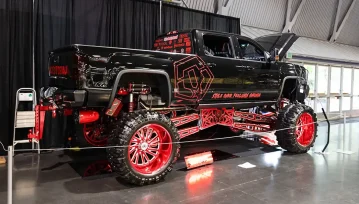
Packed with Over 500 Custom Vehicles The O’Reilly Auto Parts Sacramento Autorama at Cal Expo is one of the world’s longest-running indoor car shows, and… Continue reading
Chris Hamilton . January 13, 2025
Feature Stories
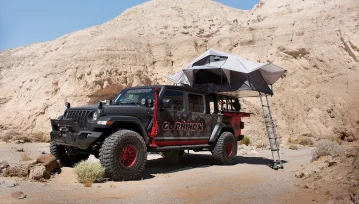
GoRhino Xtreme Rack System We know one of the major advantages of full-size rigs is the amount of gear you’re able to pack in –… Continue reading
TREAD STAFF . July 19, 2023
Buyer’s Guides
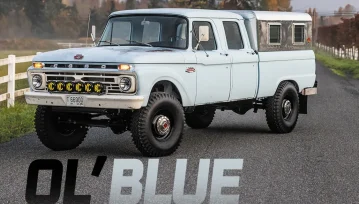
An Old-School Ford with the Heart of a New Truck What is, hands down, your ultimate dream truck? A new Ford Raptor or Bronco? An… Continue reading
Lindsey Fisher . July 12, 2024

Drag Racer
The Engine That Would Be King Ford engines had a strong presence in the early days of drag racing. The venerable flathead V-8 accounted for many… Continue reading
BILL HOLLAND . July 05, 2026
Feature Stories
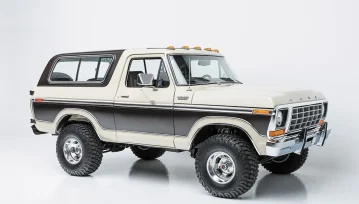
Adam and Melissa’s Super 70’s Second Gen We all have those vehicles that blast us right back to our childhoods. Even with one quick glance,… Continue reading
John Mata Jr. . July 07, 2025

Diesel World
First Annual Diesel Truck Show Buckle up for an adrenaline-fueled ride into the heart of the first-ever iDrive Throwdown Truck Show! Dezerland Park in Orlando,… Continue reading
DW STAFF . September 20, 2023

The Sparks Show
Sevierville, TN
Goodguys 36th Autumn Get-Together
Alameda County Fairgrounds 4501 Pleasanton Avenue, Pleasanton, CA 94566
Goodguys 29th Speedway Motors Southwest Nationals
WestWorld of Scottsdale 16601 North Pima Road, Scottsdale, AZ 85260




 Please wait...
Share Link