










 Amit Kumar
.
July 05, 2026
.
Drag Racer
Amit Kumar
.
July 05, 2026
.
Drag Racer

Text by Don Lindfors
Jay Lindsley and Jerry Olsen had been running a ’55 Chevy in C/Gas with help from Blair’s Speed Shop In Pasadena, California, but it was time to move up to some- thing a little faster. As luck would have it, Danny Roberts, the parts counterman at Blair’s had just bought a stock ’48 Anglia from a proverbial “little old lady from Pasadena,” and Pete Eastwood recently recalled that it was the nicest Anglia body he had ever seen. Don agreed to help Jay out and let him build the car right there in the Blair’s shop. With advice from Mike Hoag, Blair’s chassis specialist, who would later go on the run M&S Welding with Sherm Gunn and field some pretty successful drag cars of their own, Jay proceeded to build the chassis.
car would set a B/Gas record at Irwindale in 1970 running 10.19, the first of a couple of records for the car.

By the late-’60s, drag race tires were improving rapidly, and with the added traction came quicker and faster times. Because of this, something of a suspension revolution was occurring in the Gas class cars. The typical nose high, stiff rear was giving way to lower front end height for better aerodynamics and a bit more squat in the rearend. For this Anglia, Jay designed the front suspension with a dropped tube axle that he built featuring Chevy spindles, and a four-bar with Koni coil-over shocks. The car would sit quite low in the front. The steering was handled by a Corvair box that ran to a Bell crank on the front frame cross member, with a drag link connecting to the right front spindle. The design created relatively easy steering with almost no bump steer. Out back, a 1959 Olds rearend was suspended on ladder bars with a Wishbone locater that attached just above the pinion and was controlled by another set of Koni coil-overs. It was pretty advanced stuff for that late- ’60s.

Jay loaned the near-perfect body to Contemporary Fiberglass in Irwindale, California to have a mold made from it. Contemporary was supposed to have it for about two weeks, but it turned into more like three months. The shop made molds for not only the stock body, but also one-piece front ends and rear fenders. Jay got the first front end out of the mold (as well as a couple more as they got damaged). As an interesting note, this mold was used not only to make stock-height Anglia bodies, but also the chopped ones that were used on the Marrs and Lukens Blair’s A/GS Anglia (Phil Lukens worked at Blair’s at the time, and in 1975 bought the store, which he still owns today), and the Jim “Fireball” Shores cars, among others. (Jim Shores’ glass body was a replacement for the original steel Shores and Hess car that was damaged.) The Contemporary crew would build a stock-height body, and then hand chop it to the customer’s specifications.

To power this combination, a Hilborn-injected 427 Chevy was assembled with a Schiefer clutch sending power to the Hurst- shifted Muncie M-22 four-speed trans. Sig Erson helped out with a custom cam and lifters, while Doug Robinson at Horsepower Engineering built the headers. With 12.5:1 compression and ported L88 heads the combo made 600 hp. Jay had even built the pedals for the clutch and brakes, which consisted of a small Girling British car master cylinder and the Olds rear drums. Magnesium Halibrand wheels, 15×3.5 and 16×11, comprised the rolling stock, with Goodyear sports car radials on front and Goodyear slicks.
With the body in primer and no rear fenders or ’glass, Jay took it to Irwindale Raceway for a shakedown. He had to run as an Altered, but the car proved fast and all went well with some low 10-second times. (The car would set a B/Gas record at Irwindale in 1970 running 10.19, the first of a couple of records for the car.) Following the shakedown, the car was taken apart and finished properly. The body was painted by Eric’s Body Shop in Pasadena, California, and all of the required equipment was installed to run in B/Gas. The Halibrands were soon swapped out for Cragar S/S wheels because it paid contingency money.
For the 1969 season, Jay ran this combination, but with the ultra-short wheelbase (Anglias are only 90 inches and were outlawed in NHRA for a long time as being too short) and a four-speed, which in those days would upset the chassis during the shift, unlike the modern drag race transmissions, the car was either a real threat or a real handful.

For the second season, Jay decided a small-block might be a better combination, so he teamed up with Ralph Truppi of Truppi-Kling and Bill “Grumpy” Jenkins and built a 338-inch small-block. T-K supplied the roller cam, Jay ported the camel hump heads with advice from the Grump, and after loading the block with Forged True pistons and aluminum Super Rods, he topped it off with an Edelbrock tunnel ram and Holley 660s. New headers were in order, and since Jay was working at Hooker Headers at this time, Jack Davis, Hooker’s main header builder, whipped up a new set. With the Muncie four-speed and the small-block, the car was much more predictable, and Jay had a lot of success at all of the SoCal tracks, including OCIR, Famoso, Carlsbad, Lion’s, Irwindale and Pomona, where it ran the Winternationals numerous times. The car set a record at Lion’s with the small-block setup running a 9.76 at 142 mph.
By 1972, Jay decided it was time to build a new car, so the motor and trans were pulled and it was sold to Bill Kipp in San Diego, who swapped the Olds rear for a narrowed Dana 60, put a new motor and trans in it and raced it for a few years. It was then sold to Austin Cody, who drove it on the street and bracket raced it as well. No one seemed to know what had become of the Anglia, like so many old race cars, it had simply vanished.

I grew up in nearby Duarte, California, and as a young kid, I watched the car come together at Blair’s and then saw it race. The memory of the car stuck with me, and I always wanted one; so discovering an Anglia for sale in San Diego, I decided to check it out. It was flat black with an aluminum-headed big-block and a power glide. It was street legal and had been running Carlsbad in the low to mid nines. The guy didn’t know its history; he didn’t think it was anything more than an old bracket car. I worked out a trade for my ’68 SS 396 El Camino and took it home with the intention of building a street rod. I sold the BBC and Glide back to the former owner and installed a blown and injected 351 Cleveland with a C6. I built some disc brakes for the front, and changed the steering to a Vega cross steer.

At that point, I halted the project; something told me this car had some history. I researched old Anglia drag cars, and after a few years, realized not only was it famous, but I knew the car! It was the original Blair’s Speed Shop Anglia and it was hiding in plain sight, in my own garage. No longer was it destined to become a street rod, it would now be restored to its former glory. Out came the 351C, the front brakes and the Vega steering and a proper big-block Chevy and M-22 would restore her to her original build. Former Stock racer Ray Thompson donated a virgin four-bolt block. Edelbrock stepped up with a set of CNC-ported heads, and a Comp Cams full roller Super Gas setup went in. Naturally, Blair’s Speed Shop did the machine work, and I assembled the motor, topping it off with what very well may be the original Hilborn injection that Don Enriquez rebuilt. As the director of R&D for Doug’s Headers, I had no trouble duplicating the original exhaust. It’s a little larger (496-inch) and makes a little bit more horsepower now, about 935 on race gas, but externally it looks identical to the original.

The amazing thing is how close the car remained to Jay’s original build. The frame, roll cage, suspension, seat, steering, body, aluminum interior, the Eelco gas tank, even the gauges were all as they had been constructed starting in 1968. I stripped the exterior of the car back to bare metal (the interior still carries the original Ford Green) and found the body was just as perfect as Pete Eastwood had said. Joe Schmoe and Randy Gerstenberg of R/T Custom paint replicated the original red and white paint, while Phil Whetstone did the gold leaf and other lettering. (Another coincidence, Phil studied under Jack Burr who had originally lettered the car 40 years earlier). I reintroduced the car at the Grand National Roadster Show where it won Best Gasser, Best Match Racer and Best of Show in the Gasser Gathering.
I originally thought about racing the car again at historic events like the March Meet and Hot Rod Reunion, but after discussions with Jay, Pete Eastwood, Phil Lukens and even Don Blair before he passed, I have decided not to. The car is one of the few original West Coast Anglia Gassers to have survived. It has never so much as touched a wall or been hurt. It is a former record holder and has nothing left to prove. Who am I to possibly destroy this piece of history? So while it is ready to run, and I did duplicate the original cage to be currently legal, I think it is better to show it off and do the occasional cackle and burnouts. Hopefully it will end up in a museum or drag race collection.
Thanks have to go out to Jay Lindsley, Phil Lukens, Ray Thompson, Philly the Greek, D&D Plating, Painter Joe and Randy G, Greg Burrows, Jimmy Quast, and of course my wife, without whom this restoration never would have happened.
Diesel World
Steven Statton’s Precision-Built 2020 F-450 The world of badass diesel trucks is not for the meek. It’s about the muscle, the noise, and making an… Continue reading
John Mata Jr. . October 04, 2023
Chevrolet
No Spark Innovations’ F-100 Powerstroke Diesel Swap Losing a beloved vehicle in a wreck is never an easy thing to process. As long as there… Continue reading
John Mata Jr. . October 18, 2023
Feature Stories
Living the Hi Life Folks who warn against turning your hobby into a career may have never discovered the perfect balance of work and play.… Continue reading
John Mata Jr. . August 12, 2024
Buyer’s Guides
Coming Soon to a Show Near You It’s about time someone told those C10 guys who’s boss—or at least showed them that the F-100 community… Continue reading
MATHEW LAWSON . June 06, 2023
Feature Stories
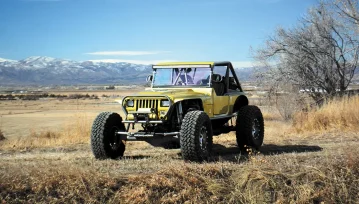
A Custom-Built, Highly Capable Jeep with Hot Rod Style Purpose-built rigs can be found all over the country these days, from overlanders to full-on race… Continue reading
Lindsey Fisher . February 19, 2025
Feature Stories
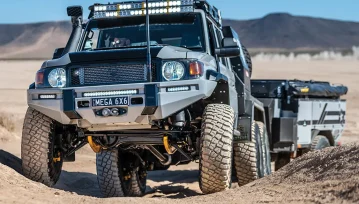
Patriot Campers Monster Land Cruiser The now famous LC79 4×4 ‘Black Truck’ just wasn’t enough. Justin Montesalvo, director of Patriot Campers, had to go bigger… Continue reading
Bryon Dorr . June 12, 2023

The Sparks Show
Sevierville, TN
Goodguys 36th Autumn Get-Together
Alameda County Fairgrounds 4501 Pleasanton Avenue, Pleasanton, CA 94566
Goodguys 29th Speedway Motors Southwest Nationals
WestWorld of Scottsdale 16601 North Pima Road, Scottsdale, AZ 85260




 Please wait...
Share Link